Streaming and Microdramas Are Reshaping Viewing Habits Across Southeast Asia: “Primetime No Longer Exists”

Share

unveiled at APOS, Asia’s leading media and entertainment conference, reveal that premium video content accounts for only a small fraction of total screen consumption in Southeast Asia, while microdramas are emerging as a powerful tool for transforming casual attention into paying audiences.
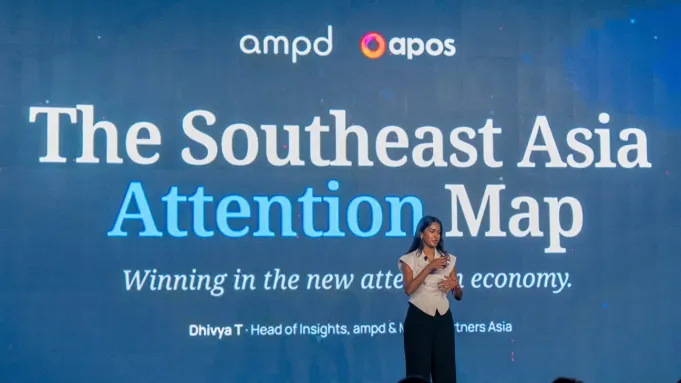
Despite the substantial investments streaming platforms continue to make across Southeast Asia, premium video captures a surprisingly modest share of consumer attention. According to research presented by Dhivya T., Head of Insights at ampd—the analytics division of Media Partners Asia (MPA) and APOS organizer—premium content represents only around 8 percent of total screen time among viewers in the region.
Speaking at the conference in Bali, Dhivya explored how streaming platforms, social media, and emerging mobile-first formats are fundamentally changing the way consumers engage with digital content, forcing media companies to rethink how they attract and retain audiences.
According to ampd’s findings, premium video-on-demand users in Southeast Asia spend roughly five hours per day on mobile leisure activities. Yet streaming services account for just 8 percent of that time. Even when television viewing is included alongside mobile usage, premium content consumption averages only about one hour daily.
Even more notable is the consistency of this figure throughout the day. Premium video maintains a relatively stable share of approximately 7 to 8 percent regardless of the time, showing little variation between morning, afternoon, and evening viewing habits.
“There is no longer a primetime,” Dhivya explained.
Rather than gathering around a single dominant form of entertainment during a specific time slot, consumers now move fluidly between social media platforms, messaging applications, short-form videos, streaming services, and microdrama content throughout the entire day.
According to Dhivya, this shift means streaming companies should not view the remaining 92 percent of screen time as market share waiting to be captured.
“The split is not a battle for percentage points,” she said. “It reflects different consumer needs that must be satisfied.”
Research from ampd also highlighted how multitasking has become standard behavior among viewers. Even during long-form content sessions, audiences are rarely focused on a single screen. Approximately one-third of premium viewing sessions involve a second screen, most commonly a locally popular mobile application.
Dhivya emphasized that smartphones are not replacing televisions. Instead, the two devices increasingly complement one another.
“The television has become the committed screen, while the phone acts as the restless screen,” she explained. “Consumers use both simultaneously.”
She categorized modern viewing behavior into two distinct forms of attention: fast attention and slow attention.
Fast attention encompasses social media feeds, messaging platforms, and short-form video content. This type of engagement is largely algorithm-driven, with content being delivered continuously to users.
Slow attention, by contrast, involves more deliberate and immersive viewing experiences. These are the programs, films, and series that audiences actively choose and commit to watching.
“Fast attention dominates the number of minutes people spend during the day,” Dhivya noted. “Slow attention wins when it comes to the most meaningful and engaged moments.”
She argued that today’s audiences—and increasingly, entertainment brands themselves—are first built within the fast-attention ecosystem. Deeper engagement and eventual monetization often begin there before transitioning into premium formats.
As an example, Dhivya referenced Backrooms, the horror film produced by A24 and directed by 20-year-old YouTube creator Kane Parsons. Originating from a viral meme on 4chan, the project evolved into A24’s biggest opening release before generating more than $260 million globally.
A similar pattern can be observed throughout Southeast Asia.
In Thailand, Netflix’s film My Dearest Assassin benefited significantly from the social media reach of its lead actress Baifern, whose Instagram following exceeds 13 million users.
Indonesia offers another example. Viral discussion threads on X (formerly Twitter) have served as the foundation for successful theatrical productions, including Dusun Mayit and the blockbuster horror sensation KKN di Desa Penari.
Dhivya summarized the phenomenon with a simple observation: content is often “built in the fast world” but ultimately “monetized in the premium world.”
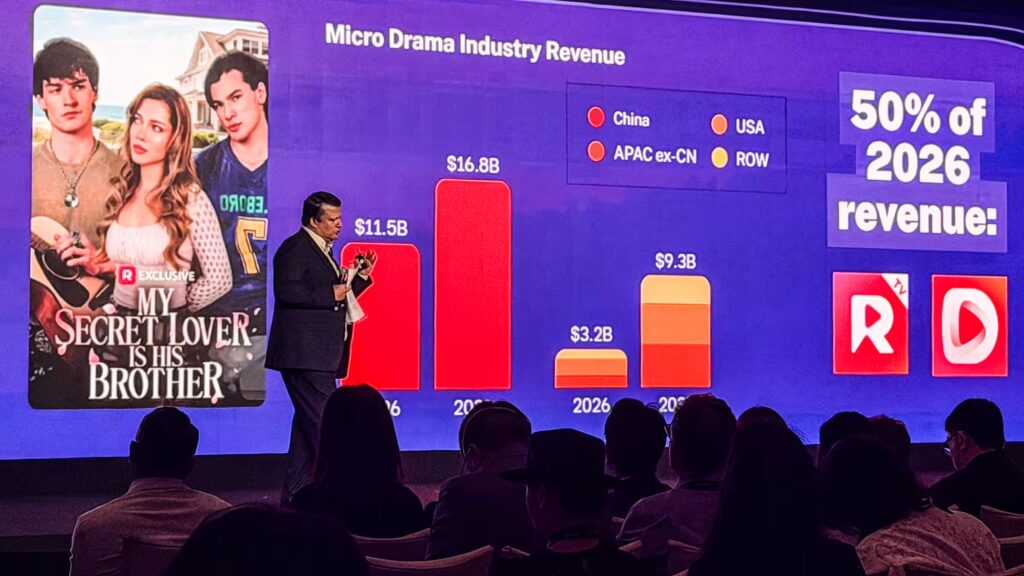
According to her, this dynamic helps explain the rapid emergence of microdramas as one of the most important new content categories in streaming.
The format was a major topic of discussion throughout APOS this year and has already attracted multiple partnerships and investment agreements.
Microdramas combine many of the storytelling elements associated with premium television—including serialized narratives, character development, and cliffhanger endings—with a mobile-first distribution model and episode-based monetization systems.
The result is a content format capable of both building audiences and generating revenue within the same fast-attention environment.
“It effectively collapses the funnel,” Dhivya explained.
Traditionally, short-form content has functioned primarily as an awareness tool, directing viewers toward premium content elsewhere. Microdramas change that equation by enabling platforms to capture attention and monetize it immediately while simultaneously guiding highly engaged users toward longer-form offerings.
“The fast layer is no longer just where awareness is created,” she said. “It is becoming a place where revenue generation begins.”
She added that success in today’s entertainment landscape increasingly depends on winning cultural relevance and online conversation.
“If you can own the conversation and become part of culture, deeper engagement follows—and monetization follows engagement.”
The presentation also provided valuable insight into content performance across Southeast Asia, highlighting significant differences between markets.
Dhivya noted that in countries with strong local production industries, domestic content consistently outperforms imported programming, including the widely popular Korean titles that dominate many international rankings.
Local productions lead viewing preferences in Indonesia and Thailand, while Korean and American content continue to hold stronger positions in Malaysia and the Philippines.
Among all regional exports, Thai content demonstrated the strongest cross-border appeal.
According to ampd’s data, Thai productions attract approximately 6.4 million viewers across other Southeast Asian markets. Their success spans multiple genres, including crime dramas, thrillers, horror series, and boys’-love programming.
Indonesian horror content has also proven capable of traveling beyond its home market, particularly in the Philippines, where Netflix has played a significant role in expanding its reach.
Meanwhile, the Philippines appears increasingly likely to become Southeast Asia’s next major growth market for entertainment content. While Filipino productions have already achieved strong domestic success, they have yet to establish the same level of regional influence as content from Thailand or Indonesia.
As regional content ecosystems continue to evolve, the data presented at APOS suggests that the future of entertainment in Southeast Asia will be defined not by a single dominant platform or viewing habit, but by an increasingly interconnected ecosystem where fast attention, premium storytelling, and new formats such as microdramas work together to capture audiences and drive growth.